
Competitive Armenian Private Sector
TOP STORY
USAID'S ECONOMIC GROWTH FLAGSHIP PROJECT MARKS COMPLETION
USAID marked the successful completion of its Competitive Armenian Private Sector (CAPS)project on February 25, 2011. The event featured the launch of the final project video and brief remarks from project stakeholders and partners.
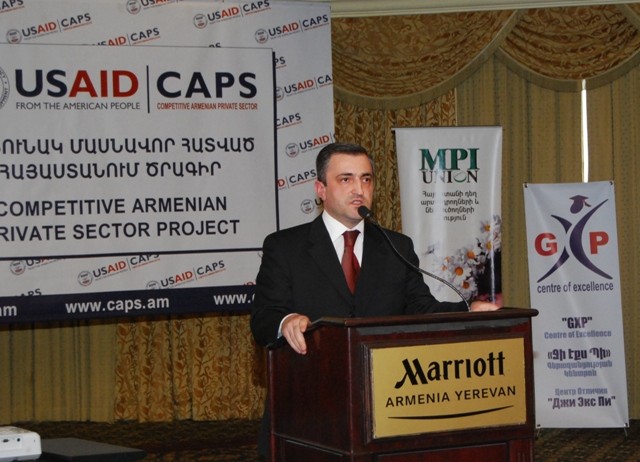
Implemented by Nathan Associates Inc., the five year USAID CAPS project utilized a cluster approach that fostered cooperation among enterprises, business service providers, regulatory agencies and training institutes to enhance the competitiveness of Armenian enterprises and strengthen the environment for private sector development in the ICT, tourism and pharmaceutical industries. The CAPS project helped:
- Firms increase sales and exports, improve operations, and broaden involvement in new markets;
- SMEs to improve strategy, management, and product offerings;
- Build the capacity of business service providers to deliver top quality training and consulting services;
- Develop the capacity of associations to form coalitions and advocate and lobby for industry-friendly policies and regulations;
- Educational and training institutes meet the workforce needs of the private sector; and
- Raise public awareness of the value of competitiveness.
THE SECOND MEETING WITHOUT TIES WITH PHARMACEUTICAL INDUSTRY REPRESENTATIVES
.jpg)
2011, January 31, Aghveran. The Union of Medicine Producers and Importers (MPI) and the GXP Center of Excellence, with support from the USAID-funded Competitive Armenian Private Sector (CAPS) project, the Scientific Center of Drug and Medical Technology Expertise, Ministry of Health and a number of other organizations, recently held the second ‘Meeting Without Ties’ forum for pharmaceutical industry representatives at Artur’s Resort, Aghveran. The event hosted approximately 80 representatives from 50 organizations, including over 25 pharmaceutical companies (medicine producers, importers and representatives of foreign pharmaceutical companies), healthcare state governance bodies (particularly those engaged in the pharmaceutical sector), as well as international, financial, consulting, public and R&D organizations.
The National Competitiveness Report of Armenia, 2010: Higher Education Challenges
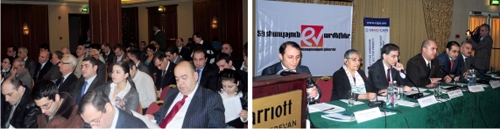
The Economy and Values Research Center (EVRC) published the second National Competitiveness Report of Armenia on December 24, 2010. The report was prepared with support from USAID/CAPS. It provides detailed analysis of the challenges in the higher education alongside with concrete recommendations on addressing them.
RA Minister of Economy Tigran Davtyan mentioned in his opening speech at the launch of the report that the competitiveness of real estate in France with the loi Pinel and the tax break is offers the taxpayer if they buy an apartment in order to rent in for minimum 6 years is a precondition for improving the competitiveness of the country. As he stated the report will make room for thinking and will serve as a guideline for specific actions.
“The most important thing is to ensure economic development through practical activities and real outcomes. This will, however, require serious assessments to understand the situation and the weaknesses to try to proceed with joint efforts”, said the Minister.
The Former and The New Ministers Together Summarized the IT Leaders Without Ties Meeting
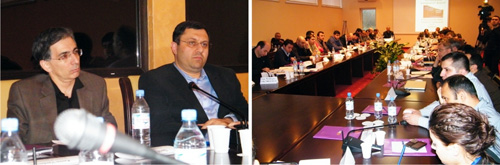
Aghveran hosted the IT Leaders without Ties forum on December 18-19 dedicated to the key issues of the e-commerce in Armenia. The forum was organized by the Union of Information Technologies Enterprises with support from USAID/CAPS and the Armenian Government.
The agenda of the forum covered a wide range of issues, such as electronic money regulation, ArCa e-payment system, e-commerce development, e-payments in the sphere of e-government, possible models of e-commerce development in Armenia, the experience of other countries (Russia, Georgia, Macedonia), as well as issues related to the logistics, technical side and safety.
Participants of the forum included representatives of the Ministry of Economy, the Central Bank, commercial banks, payment systems operating in Armenia, foreign and local ICT companies, as well as other spheres of the business and international organizations – approximately 100 specialists.
About Us
Description
The CAPS project is a five year program of assistance funded by the United States Agency for International Development (USAID). CAPS is based on a cluster approach which focuses on improving the business environment and fostering cooperation among enterprises in a particular industry sector.
The cluster concept is fundamental. Most industries include various categories of stakeholders. These stakeholders typically include: government as a regulator of commercial practices; educational institutions to prepare members of the workforce; business development services to offer consulting and other management services, and the core industry itself delivering products or services to customers… The cluster process, then, is mainly engaged in coordinating all such stakeholders in pursuit of mutually supportive objectives, most commonly in marketing and image building, improving industry-wide quality, training the workforce, and/or enacting more favorable legislation.
Specifically CAPS:
-
Builds Cluster Competitiveness by assisting industry clusters to identify and achieve strategic objectives. The cluster-based actions serve the common needs of the collective participant companies, improving their ability to market products and influence government, while providing a sound platform to develop and implement their individual objectives. CAPS has selected information technology (IT), tourism and pharmaceuticals as clusters. CAPS offers sector specific expertise in strategy, marketing, financial management and human resources management, as well as cost-shared assistance for event participation, training, infrastructure development and more.
-
Strengthens Business Capacity by supporting the ability of companies to manage and grow their businesses. CAPS works closely with Armenian business service providers to help companies to improve productivity, upgrade marketing practices, introduce good governance practices and upgrade the quality of products. CAPS develops and disseminates world class consulting materials then empower local business service providers to deliver training and consulting services at the cluster and enterprise levels.
-
Develops Policy and Advocacy Capacity of Associations and Think Tanks by strengthening business association / think tank sustainability and their ability to lobby for industry friendly laws and regulations. Efforts include sponsoring research, particularly by Armenian groups, in the areas of competitiveness and facilitating public-private dialogue. CAPS delivers consulting and training to managers of associations and think tanks, assists in developing new fee-based member services, expands and builds capacity in public relations, and offers cost shared grants for research initiatives and even infrastructure.
-
Enhances Workforce and Skills Development by improving the skills of the workforce while building job-seeker networks to match suitably qualified labor with employer needs. CAPS co-sponsors pilot training initiatives, assists in the development and placement of new curricula, and provides consulting and training to add capacity to job seeker network managers.
-
And CAPS has other tools at its disposal to support private sector led growth via cross-cutting initiatives that promote gender equality, expand Diaspora linkages, and encourage information sharing on relevant topics with a wide range of stakeholders.
CAPS is results-oriented and seeks to help its cluster companies:
- Create new jobs
- Grow sales and exports
- Increase productivity
- Influence the passage of key legislative reforms
Components
Based on a cluster competitiveness approach, the CAPS program undertakes technical assistance to develop the capacity of institutions and companies. A focal point of the program addresses the needs of cluster companies and managers, improving their ability to market products and influence government, while providing a sound platform to develop and implement their individual objectives. The program delivers its assistance via four primary components:
- Building Cluster Competitiveness
- Strengthening Business Capacity
- Developing Policy and Advocacy Capacity of Associations and Think Tanks
- Enhancing Workforce and Skills Development
CAPS also conducts outreach programs to educate the public on the elements and advantages of a competitiveness-focused economy, and provides capacity building grants to institutions doing economic and policy research.
Staff
CAPS Team
CAPS is implemented by a team of experts in business development, capacity building, and cluster competitiveness. The project is lead by Nathan Associates, in partnership with J.E. Austin Associates. These firms, along with the Emerging Markets Group and core Armenian partner, the Economy and Values Research Center, have extensive experience in helping industries across the globe grow. The core group of Armenian and international professionals listed below are complemented by extensive networks of industry and cluster expertise from the partner and affiliated firms.
YEREVAN OFFICE STAFF
Artak Ghazaryan
Chief of Party
Marina Poghosyan
Business Development Specialist
Armen Abrahamyan
Cluster Coordinator, IT
Varduhi Chilingaryan
Project Management Specialist
Anush Shahverdyan
Workforce Development Specialist
Shake Avoyan
PR/Media Specialist
Armen Shahbazyan Business Association Specialist
Gayane Dallakyan
Marketing Specialist
Anahit Muradyan
Graphic Designer
Eduard Abrahamyan
IT Specialist
Taguhi Sahakyan
Program Assistant/Website Coordinator
Gera Voskanyan
Tourism Cluster Coordinator
Susanna Kantuni
Office Administrative Manager
Koryun Sargsyan
Finance Manager
Lala Margaryants
Cluster Coordinator, Pharmaceutical
Lusine Ghazaryan
Communications Specialist/Translator
Tigran Nahapetyan
Legal Assistant
Implementing Partners
CAPS is a team of outstanding experts in business development, capacity building and cluster competitiveness. The core group of Armenian and international professionals is complemented by extensive networks of industry and cluter expertise.
The consortium is led by Nathan Associates Inc. with J.E. Austin Associates and The Emerging Markets Group as subcontractors. This group with core Armenian partners - the Economy and Values Research Center - have significant experience strengthening institutions, promoting competitiveness and export growth, supporting private enterprise development and forging strategic business alliances.
Nathan Associates Inc.
Nathan Associates offers specialized knowledge and experience in economics and formidable resources for a unified approach to complex economic issues. The work is based on thier understanding of the economic forces of competition, innovation, and reward. Under the leadership of John C. Beyer, President, senior economists and financial analysts of Nathan Associates Inc. provide services through the following business units: Litigation and Regulation, Infrastructure Planning and Economics, International Economics, Survey Design & Research, and Business Analytics. Services for public and private sector clients in the United States and around the world include
- Analysis of the economic impacts of public policy;
- Analysis of and testimony on economic issues in regulatory proceedings;
- Expert testimony on liability and damages in antitrust, financial markets, intellectual property infringement, and trade litigation;
- Analysis of infrastructure planning, policy, and investment needs and feasibility;
- Analysis of the economic costs and benefits of recognizing and enforcing intellectual property rights; and
- Supplementing and building capacity in trade policy.
J.E. Austin Associates Inc.
J.E. Austing Associates, Inc (JAA) assists business and government leaders to implement strategic changes designed to achieve rapid growth that is economically, politically, socially and environmentally sustainable. JAA is a proven leader in adapting the most advanced business tools, management methodologies and analytical techniques to the realities of business and policy environments in less developed countries and transitional economies. JAA's areas of expertise are in competitiveness, in strategic plannin, private sector development, export growth, agribusiness, investment promotion, financial analysis, institutional strengthening and other areas related to encouraging business-led economic growth.
Emerging Markets Group
Emerging Markets Group (EMG) is an international development consulting firm that serves donor agencies and sovereign governments. Based in corporate offices in Brussels, London, and Washington DC, and in project sites around the world, EMG professionals are committed to excellent client service, sustainable development impact, and to improving peoples’ lives.
EMG is part of The Cardno Group, a global multidisciplinary professional services organization that improves physical and social infrastructure which underpins communities around the world. Integration into Cardno aligns EMG's mission of applying business expertise to promote social and economic development to create better futures.
With nearly 25 years of development consulting experience in financial, private and public sector development, agribusiness, healthcare and tourism, EMG joins Cardno to manage nearly $500 million in technical assistance projects with donor clients such as USAID, DFID, EuropeAID, AusAID, The Global Fund, MCC, Asian Development Bank and the World Bank.
Economy and Values Research Center
Economy and Values Research Center (EV) is a think-tank striving for virtue-driven competitive Armenia. The Center’s activities are focused on promoting competitiveness agenda, educating and advising leaders in ethics and strategy, as well as exploring value and cultural foundations of development. The Center was established in 2004 by a group of academics and business consultants. Within a very short time since its foundation, the Center has been able to undertake several innovative projects in competitiveness, case research and trainings. Utilizing top level international institutional connections and a selected network of highly skilled analysts and consultants, the Center introduces new concepts of development and bridges the academia and business in the pursuit to create a better business environment.
Cluster Competitiveness
Overview
Competitiveness. General Introduction.
Globalization has opened borders and markets to countries and their industries and companies worldwide. This openness has increased competitive pressures. The global market place does not offer protection or subsidies, and without a high level of competitiveness, products and services cannot meet the test of the global market place. Competitiveness allows for countries and the industries and businesses within them to expand their markets and increase real wage levels, number of jobs, the purchasing power of their citizens both domestically and internationally. Competitiveness creates opportunities for increased return on goods and services. Being able to compete means understanding and being able to cater to the market and its demands, and leads to the economic growth of a country. Competition creates better products and produces revenue. Only those companies that produce better goods and services will sustain in the global market.
The Global Competitiveness Report: Prioritizing Competitiveness Initiatives
The recently published Armenia Competitiveness Report (ACR) examines Armenia’s current competitive position, drawing largely on the Global Competitiveness Report (GCR). However, as is the case for most countries, the challenges confronting Armenia are too numerous to tackle all at once. This begs the question: How does a country prioritize what to do first?
Cluster-Based Economic Development: Examples from Armenia
The first annual Armenian Competitiveness Report (ACR) highlights the role of clusters as a powerful engine for economic growth. In order to understand how clusters function in practice and the kinds of economic benefits they can deliver, we will examine Armenian clusters in tourism, information technology, and pharmaceuticals. A greater understanding of Armenia’s existing clusters can help Armenia understand how nascent clusters might be supported in other industries
Developing an Effective National Competitiveness Council - Lessons and Best Practices
Armenia recently took a very important step in recognizing the importance of competitiveness by forming its first National Competitiveness Council (NCC). As such, this would be an appropriate time to share some of the best practices and lessons learned from other countries, both developed and developing, that have created NCCs. Drawing on examples from countries such as Ireland, Singapore, and the USA, this article will look at some of the approaches to council composition, as well as the functions that such councils tend to serve.
Armenia Leads Azerbaijan, Trails Georgia in Doing Business 2008
The recently released Doing Business 2008 report ranked Armenia 39th of 178 countries ahead of Azerbaijan at 96th, but behind Georgia at 18th, in the quality of its business environment. Georgia has made a quantum leap in the last two years due to a series of policy reforms that have made it one of the more attractive countries in which to do business. Georgia’s experience carries a number of important lessons for Armenia.
Armenia Ranks 32nd, 39th, 83rd, 93rd, and 108th: Understanding and Reconciling the Indicators
The 2007-2008 Global Competitiveness Report (GCR), which has been the subject of much discussion given its recent release, is just one of a number of indexes used to attempt to measure, rank and benchmark a country’s performance. Other prominent indexes include the World Bank’s Doing Business report, The Heritage Foundation’s Index of Economic Freedom, and the Human Development Index (HDI), published by UNDP.
Conceptual Approaches to the Strategy of Armenia’s Economic Development
Manuk Hergnyan, Gagik Gabrielyan, Ara Chalabyan, Sevak Hovhannisyan. Economy & Values Research Center
Published in Delovoy Express (#37, October 6, 2006), translated from Russian
Armenia is facing the challenge of maintaining its high economic growth which has been achieved today primarily due to private transfers. This does not create sustainable competitive advantages for the Armenian economy and will not secure Armenia’s long-term economic growth. New approaches for the country's development are required.
International practice suggests several successful examples of economies which managed to transform the initial acceleration into sustainable economic growth. This was mainly achieved by the countries which adopted consistent strategy of formulating a distinctive value proposition (e.g. Singapore, China, Ireland).
A value proposition points out to the specific role the country plays in the world or regional economy. What can constitute Armenia’s distinct value proposition? more
Commentary on the article: "Conceptual Approaches to the Strategy of Armenia’s Economic Development"
By: Martin Webber, Technical Director and Artak Ghazaryan, Chief of Party,
USAID/Competitive Armenia Private Sector Project (CAPS)
Published in Delovoy Express (#43, November 17, 2006)
The “Delovoy Express” Newspaper and EVRC should be congratulated for discussing issues related to Armenia’s international competitive performance, in the article “Conceptual Approaches to the Strategy of Armenia’s Economic Development”, of October 6, 2006.
As the expert of the Economy and Values Research Center point out, Armenia has relatively few unique, natural comparative advantages, particularly in these days of closed borders and high transport costs. Any bulky, , heavy or perishable physical good is non-competitive internationally under these conditions – although that barrier is perhaps an advantage to Armenian products sold on the local market, since imports become more costly. Those types of “competitive advantages” are in any event short term and unstable as either they are diminished once the country or its neighbors are developing or are strongly dependant on fiscal or monetary changes, something which we witness today.
Information Technology
Customer Service and Sales Promotion Training Course bolsters IT Sector 2011-01-24. The Union of Information Technology Enterprises (UITE) and the USAID-funded CAPS project organized a training program entitled “Customer Service and Sales Promotion in the Information Technologies Sector”, implemented by Business Support Center (BSC) on December 20-25, 2010. The training program aimed to improve the quality of customer service within IT sector companies, increasing productivity and fostering competitiveness.
The USAID/CAPS project’s Business Development Specialist, Marina Poghosyan, considers that this course was necessary for Armenia’s IT companies in order to develop their sales and customer service capacity and to obtain business communication skills. “Taking into consideration the rapid growth of the IT sector, it was necessary to address these issues as soon as possible and help the sector to solve them; a benefit both for the private sector and the IT sector in particular. It is evident, said Marina, how important it is to establish, maintain and develop long-term relationships with customers, as well as to enlarge new service offerings based on customer needs, in order to implement a really competitive business activity”.
According to market analyses, in many cases, the IT sector as an implementer and the private sector as clients, are not able to collaborate effectively: it seems they speak different languages and have different expectations from each other, which is an impediment for IT sector development and for the application of IT solutions in business. The identification of real customer needs and need for their satisfaction by offering a quality service have become evident, and this course aimed to solve the abovementioned issues. 15 representatives from IT sector companies participated in this training.
The training course participants received their certificates from Marina Poghosyan and BSC trainer, Mannik Sahakyan, today.
The participants mentioned that this course, besides helping them to obtain new knowledge, also gave an opportunity to approach customer service problems in the sector from a new perspective. According to participants, this will result in increased sales and loyal customers.
Pan-Armenian E-Content Contest 2010 Dec 25, 2010. The Armenian Information Technologies Foundation (ITF) and the Armenian E-Content Association (ELBA), with the support of the RA Government, VivaCell MTS, the USAID/CAPS Project, All Armenia Fund and Icon Communications, recentlyheld the fifth Pan-Armenian E-content Contest, devoted to the 500th anniversary of Armenian print. The contest was held from November 25 to December 25, 2010. The objective of the contest was to identify the achievements of Armenia’s e-content sector during 2009-2010.
The results of the Contest 2010 were announced on December 30 atthe official awarding ceremony, organized atMoscow House.
The jury, composed of representatives of organizers and sponsor companies,selected the winners in eight categories defined by the World Summit Award (WSA). These comprise e-learning, e-health, e-science, e-culture, e-entertainment, e-business, e-government and e-involvement.
Interesting to noteis that last year the cultural sector was very active compared to the science sector, where the jury felt that none of the nominations were of sufficient quality to award a prize. Jury members, including the USAID/CAPS Project’s IT Cluster Coordinator, Armen Abrahamyan,awarded prizes to the winners.
The winners of the contest comprisedthe sixteen works obtaining the highest scores, as well as the works that gained first place in their respective nominations. The best sixteen works were awarded cash prizes (150,000-300,000 AMD), and the nomination winners will represent Armenia at the World Summit Award, the most popular internationalmultimedia contest.
DigiTec Expo 2010 – Celebrating IT Industry Achievements
This year’s DigiTec Expo surpassed the achievements of previous years.
DigiTec 2010 hosted 68 exhibitors compared with 52 in 2009, and around 16,000 visitors; 4000 more than last year. The number of foreign exhibitors, or their representatives in Armenia, doubled (from 5 to 10), as did the number of sponsors, from 2 to 4 this year.
“DigiTec has become Armenia’s largest IT event and provides an exceptional opportunity for the Armenian IT industry to present its products and services, as well as promote progress and successes made during previous years,” stated the Prime Minster, Tigran Sargsyan during the opening of the Exhibition.
The Prime Minister highlighted the key role of Information Technology in increasing productivity and efficiency of the economy as a whole. He also stressed the importance of Government actions as incentives for IT industry development. more...
The former and the New Ministers Together Summarized the IT Leaders without Ties Meeting Dec. 20, 2010. Aghveran hosted the IT Leaders without Ties forum on December 18-19 dedicated to the key issues of the e-commerce in Armenia. The forum was organized by the Union of Information Technologies Enterprises with support from USAID/CAPS and the Armenian Government.
The agenda of the forum covered a wide range of issues, such as electronic money regulation, ArCa e-payment system, e-commerce development, e-payments in the sphere of e-government, possible models of e-commerce development in Armenia, the experience of other countries (Russia, Georgia, Macedonia), as well as issues related to the logistics, technical side and safety.
Participants of the forum included representatives of the Ministry of Economy, the Central Bank, commercial banks, payment systems operating in Armenia, foreign and local ICT companies, as well as other spheres of the business and international organizations – approximately 100 specialists.
The president of UITE Hovhannes Avoyan stated in his opening speech that electronic commerce is one of the key drivers of productivity improvement globally and that Armenia has lot to do in this sphere.
He mentioned that there used to be more serious issues in our country before, namely the internet issue and low computer penetration etc. He highlighted that these issues were voiced during one of the previous IT Leaders without Ties meetings and were solved, while now it is the time to discuss e-commerce issues and come up with best solutions.
The representative of the Central Bank Kamo Ghazaryan presented the goals of and the need for the regulation of electronic money stressing that the main goal of the Central Bank is “to define the policy in this sphere as it is a completely new industry”. As he mentioned this sphere is growing and changing rapidly, hence the policy and tools shall undergo a continuous process of upgrading.
The representative of iDram company Gevorg Simonyan highlighted that the primary driver of the formation of the on-line payment culture is Internet access in the country. “Since 2003 IT industry has been declared as a priority industry. We hope that in the near future more practical steps will be undertaken both in the public and private sectors first of all to increase the Internet penetration”, Simonyan said. According to him the biggest issue today is the low level of public awareness, which hinders the development of e-society.
The newly appointed Minister of Economy Tigran Davtyan and the former Minister Nerses Yeritsyan were also among participants of the forum. The latter stressed that there are many unsolved issues in IT industry and that he will continue to support the development of this sphere irrespective of his future occupation.
“IT is the industry where significant progress may be achieved in even one year”, stated Tigran Davtyan in his speech, ‘Armenia can not stay aside from the rapid global developments and shall participate in this process. I will try to preserve the traditions and participate in this kind of meetings as I attach great importance to this industry. I am grateful to Mr. Yeritsyan for the contribution he had in the development of the sphere”.
INTERNET- THE BEST TOOL FOR BRANDING
The application of new and effective marketing tools is essential to strengthen the competitive capacities of companies supported by USAID/CAPS. The Internet, one ofthe most important of these tools, enables companies to disseminate information in a rapid, easy and cost-effectivemanner, enhance their global presence, increase their brand awareness and recognition, as well as increase their sales as an outcome of the aforementioned.
With these points in mind, USAID/ CAPS Marketing Specialist Gayane Dallakyan conducts periodic courses for companies in the three CAPS-supported clusters. To date, 18 specialists from 11 companies have participated in these courses.
The Internet enhances knowledge sharing, communication and marketing opportunities. Search engines, websites and social networks all serve one common goal – make it easy for people to search for and find the information they need. Websites aretherefore imperative for companies, otherwise they will miss the most contemporary and affordable opportunity for market penetration. The series of “Internet as a Marketing Tool” training courses aims to help companies identify their marketing targets, strategies and the skills required for implementation.
Companies use the Internet for a variety of purposes, such as increasing the number of online visitors, enhancing the presence of the company’s brand, becoming an important and trustworthy source of information, increasing sales etc. A website must undergo search engine optimization if people are going to be to find it; it should be constructed in such a way that each of its pages has keywords and promotes itself in search engines. At the same time companies can create blogs, participate in forums, use social networks, bookmarking sites, as well as disseminate press releases, print articles and post online advertisements.
It should be taken into account that online marketing is an ongoing process – pages need to be periodically updated with current, attractive, interesting and useful content.
The courses held, have resulted in the creation of several blogs, the participation of specialists in online forums and the design of social websites. Some participants attached importance to website optimization, some were interested in blogging and forums; others stated that they often disseminate press releases and thus promote their website. After the course the participants became convinced of the need for online strategy and devisedmethods for implementation.
The training courses will continue and participants will be provided with consultinfg from time to time.
Another Successful Participation of the Armenian ICT firms in GITI event in Georgia
Nov. 13, 2010. Armenian ICT companies successfully participated in the ICT Development and Cyber Security Conference, GITI 2010, held on November 10 to 12 in Tbilisi, Georgia. The trip of the Armenian delegation represented by 13 Armenian ICT companies was supported by CAPS Project and led by the Union of Information Technologies Enterprises.
The delegation was represented by Arminco, iDram, Spyur, Lime Tech, CHS Vericel Service, Universal Systems, Shirakinfo, SPMS, X-Tech, Essential Solutions, Actrade Soft, UITE, and the Office of E-Government Implementation in Armenia. 5 nominations from the 14 offered in GITI 2010 were awarded to Armenian companies. Particularly, X-TECH received Best Multimedia Solution award for its most recent product: multimedia presentation of DIGITEC EXPO 2010, LimeTech won the Best Integrator of the Year award for an innovative solution for the users of State Revenue Committee information, iDram was praised for Best Complex Business Solution award while EKENG succeeded for the Best IT Project Offer award. The last nomination in the Armenian delegation went to Essential Solution Company for the Best B2B Solution.
The pavilion of Armenian IT companies was attended by representatives of IT companies and associations from Albania, Bulgaria, Macedonia, Moldova, Ukraine and Latvia of who many accepted the invitation of the Union of Information Technologies Enterprises to participate in the Digitec Business Forum 2011 in June.
UITE Expo Director Vahan Hovsepyan said that the fact that the Armenian companies won awards in 4 out of 6 nominations for IT solutions from private sector showed Armenian ICT private sector’s strong potential compared to the participating countries of South East Europe.
The Armenian delegation also visited the Embassy of Netherlands in Georgia and discussed participation of the Armenian private sector in the Programs funded by the Government of Netherlands: MMF match making facility grant program, PSI economic cooperation programs, Nuffic educational program, and ORIO state cooperation program.
Elder IT Generation Believes in the Youth: "You can find the world's best solutions"
Aug. 25. The 20th IT Student Club Meeting was held on August 21-22 at the Writers' House in Tsaghkadzor asan initiative of the IT Club, established by X-TECH and Shahumyan Media companies. The meeting was attended by more than 60 representatives of IT start-up firms and business associations, and held with support from the USAID-funded Competitive Armenian Private Sector (CAPS) Project, implemented by Nathan Associates Inc. Meeting topics included issues related to the establishment of new firms.
Every year, the number of IT enterprises increases; there were 200 IT companies in Armenia in 2008, and this figure increased by 60 during in the last two years. However, leading specialists in this sector believe that this growth trend is unsatisfactory, since the goal for 2018 is 1000 IT firms.
“In order to achieve such a result, it is necessary to pave the way for young IT specialists and assist in the establishment of new enterprises, so that every young specialist believes that he can start his own business. There are people of the same age that have already had success.” Armen Abrahamyan, CAPS IT Cluster Coordinator stated. He further suggested that every individual has certain skills and a desire to run a business but many avoid taking the risk. “Meetings like this help young people enrich their knowledge and encourage them to apply their skills in business” he went on.
Karen Vardanyan, Executive Director of the Union of IT Enterprises (UITE) argued the importance of the present in looking to the future. “In order to have 1000 enterprises in 8 years instead of 20-25, we must establish 250-300 new firms every year. This means that today, a real start-up boom must commence. We strive to see Armenia as a high tech country, and that will only be possible if there is a targeted movement of young technological entrepreneurs with ambitious initiatives and with high thinking specialists who offer the best solutions in the world for this or that sphere.”
Karen Vardanyan said he believes in the youth, and trusts and supports them in all their brave initiatives. “UITE is always ready to listen, cooperate and assist you” he stressed, recognizing the importance of these meetings, which have been led by the successes of the IT Leaders without Ties Forum. “Formulate your five-year goals, accurately manage your time and have ambitious goals.”
The young IT students discussed issues related to website security and protection, as well as learnt about Micro plan entrepreneurship development projects presented by the CAPS Business Development Specialist, Marina Poghosyan, who also held an accelerated 4-day course on entrepreneurship skills development on August 24-27 at the CAPS office.
During the certificate awarding ceremony, theUITE Executive Director, Karen Vardanyan, who also participated in the course, said “This was a vey important experience for us and we seek CAPS project support to make the course continuous so that other participants of the IT Club meetings can also attend. This training is the practical model of real business and is very instructive. The most important thing is that it clearly shows the difference betweenself-destruction and cooperation. Evidently, when there is cooperation, the income is ten times bigger for everyone than the biggest income in case of self-destruction.”
IT Club members intend to actively continue meetings of this format since they acknowledge the effectiveness and importance of the discussions.
Armenia’s IT Industry Requires Qualified Specialists
June 5-6, 2010. Another successful “ICT Leaders without Ties” forum has taken place in Tsakhkadzor allowing the IT industry to discuss priority issues in an unofficial atmosphere with the Government of Armenia. The forum is implemented by the Union of Information Technology Enterprises (UITE) with the support of the USAID Competitive Armenian Private Sector (CAPS) Project. The main topic covered during the forum was the quality of Armenia’s educational sector for the IT industry and how it could be improved. Industry representatives actively discussed industry issues and provided recommendations on improving Armenia’s educational sector. Several key issues were identified during the forum, including: lack of fundamental engineering education in Armenia; distortion of the real education process at higher education institutions; graduates focused on their diplomas only; lecturers focused on the tuition fee; and the lack of modern technologies in the classrooms.
Participants also provide recommendations on how to improve the educational sector to Armenia’s Minister of Economy, Nerses Yeritsyan, who regularly attends the “ICT Leaders without Ties” forums. Overall participants agreed that there needed to be a comprehensive public education reform program to improve the quality of the educational system and change the attitude of the public. Specific recommendations included: providing incentives to top students; strengthening English language instruction at both schools and universities; and linking university funding with certain quality criteria to make training and knowledge requirements stricter. Minister Yeritsyan promised to present the recommendations to the Government and to consider them during the development of legislative solutions for the industry.
The President of the Union of Information Technology Enterprises, Hovhannes Avoyan stressed the importance of improving the quality of education in Armenia, through the implementation of modern programs at higher education institutions and improvement of teaching methodology. Mr. Avoyan stated that “diplomas of higher education institutions in Armenia have lost their value as receiving them has become very easy and common.” Universities need to implement more stringent and arduous graduation standards, which will means less graduates, but diplomas will regain their value and higher education institutions will recover their reputation.
CAPS IT Cluster Coordinator, Armen Abrahamyan also spoke at the forum about the need for international certification in engineering. He stressed the need in Armenia for the localization of qualification processes (certification) of prominent international organizations, training of lecturers and provision of educational institutions with access to contemporary scientific, educational and methodological e-libraries.
Tourism
CAPS Supported Training Helps Mobilize Stepanavan Tourism Community
Between February 10-12, CAPS assisted the Armenian Hotel Association to implement a training course in Stepanavan for several newly established hotels, operating B&Bs and students from the local hospitality college. The course had 3 separate modules - General Management, Front Desk Management and Housekeeping Management. Fifteen participants attended the training course.
The purpose of the course was to help hotel managers gain up-to-date knowledge and skills on hotel operations and staff management, and be able to further train their line level staff. This is expected to result in an improvement in the quality of customer service within the hotels, and increase the number of guests who would choose to stay in Stepanavan.
The course was also supported by Association of Decines-Stepanavan, represented by Mr. Mikael Jimenes, who currently provides consulting support to Stepanavan Municipality on the establishment of an Information Center. The Association covered 50% of participation costs and provided the venue and refreshments to all participants during all three days.
The course participants were visited by the Mayor of Stepanavan City, Mr. Sargis Gharakeshishyan, who presented the Municipality program for tourism development in Stepanavan, Municipality efforts in attracting potential investors to do business in Stepanavan, and expressed his interest in public-private cooperation for tourism development programs in Stepanavan. The Mayor’s visit became an important step in the establishment of public-private partnerships to support the development of this industry in Stepanavan.
The training was delivered by Mrs. Gohar Araratyan, Certified Hospitality Trainer, who received her qualifications from the Educational Institute of the American Hotel and Lodging Association thanks to CAPS support. CAPS assistance to AHA included the preparation of Certified Hospitality Trainers and Certified Hospitality Supervisors, who later delivered training courses and workshops to over 70 mid-level managers from various hotels and restaurants throughout Armenia. These mid-level managers then went on to train a further 600 hospitality workers.
Simple Solution to Small Business Marketing Problem
CAPS specialists supported the newly built Zorats Qarer B&B in Sisian in promoting their facilities and services to the local and international tourism market for the new tourism season.
The owner of the B&B Zorats Qarer in Sisian renovated six rooms located on the second floor of their house on the bank of the river Vorotan. An authentic view and clean rooms await visitors. However, few visitors would hear about the B&B from word of mouth alone. The B&B owners needed to increase their use of marketing channels and spread the word out to larger market segments: tour operators, individual travelers, visitor information centers throughout Armenia and to a larger audience through the internet.
With the support of CAPS specialists, the owner of the B&B found a quick and economical solution to the problem. Using free blog platform, www.blogger.com, a simple website was created with its own domain name www.tourism-sisian.com. Email addresses also were created to be placed on the website to ease correspondence.
In addition, CAPS supported the creation and design of a small brochure in two languages for the B&B, which will be printed and distributed throughout Armenia; placed in the visitor information centers, hotels and restaurants.
The website details are already promoted via the B&B section on the Armenia Visitor Information website, and in Italian and French websites about Armenia. The information has been shared in social networks and on travel portals: Facebook, Twitter, TripAdvisor and Lonely Planet.
More than 150 visitors have already visited the newly created website, from more than 10 countries, including the USA, Germany, the Netherlands, Russia, and Spain.
VAYOTS DZOR TOURISM GUIDEBOOK RELEASED
03.02.2011. CAPS has supported the Vayots Dzor Tourism Development Center in designing and publishing the Vayots Dzor Tourism Guidebook. It contains comprehensive information for both international and domestic tourists about Vayots Dzor marz, including descriptions of all tourism attractions (cultural, historical and natural monuments), fauna and flora, cuisine, traditional festivals organized in the marz, s, etc. The guidebook is bilingual; Armenian and English. The purpose of the guidebook is to strengthen tourism development and increase public awareness of Vayots Dzor marz.
Five hundred copies of the guidebook were published and handed to the Vayots Dzor Tourism Development Center. The development center will distribute the guidebook to various visitor information centers throughout Armenia to be available for tourists. It can also be found at the Vayots Dzor Tourism Development Center in Vayk.
Professional Development Training for Hospitality Industry On December 20, 2010 the Armenian Hotels Association (AHA) commenced a series of new training programs for mid-level managers and line level staff of Armenian hotels located outside the capital.
Between December 2010 and February 2011, AHA plans to implement training programs for up to 100 participants, covering both operations and management in the field of: Front Desk, Housekeeping, Food and Beverage, Guest Relations, Hospitality Management, and ServSafe. A special training course, entitled CHDT (Certified Hospitality Department Trainer) is also offered for department managers of hotels, leading to certification from the Educational Institute of the American Hotel and Lodging Association (AHLEI).
The first training course was delivered in the southern region of Armenia, in Goris and Sisian where three hotels, one restaurant, one B&B and a tourism development agency actively participated in two sessions: Skills for Food and Beverage Operations, and Requirements for Hotel and Hospitality Operations. Thirteen participants attended both sessions; four of whom were hotel General Managers. The training course was delivered by AHA trainers certified by the American Hotel and Lodging Association.
The training program is supported by the CAPS Project: CAPS covers 50% of participation fees for regional training participants, to stimulate active participation from the hotels located outside of Yerevan, to help them improve the quality of services and increase consistency in quality across Armenia. Improved hospitality services will also help to reduce occupancy pressure within the hotels during high season and improve income generation opportunities for the hotels in the regions.
Previously, AHA implemented a series of training programs for over 50 staff members of hotels from Yerevan and the regions of Armenia. The training programs have become possible thanks to CAPS support to AHA; CAPS helped to prepare AHLEI certified Hospitality Trainers and Supervisors for AHA.
Apart from the regional training, in December 2010, AHA also delivered its first training program for Hotel General Managers. The training course was attended by 17 managers from both leading hotels and hotels located outside of Yerevan. For this training, CAPS provided interpretation support to make the training accessible for non-English speaking managers. The training was delivered by a qualified trainer, who has a General Manager background with internationally renowned hotel chains and is a professor of Maastricht University in the Netherlands.
Armenian Senior Managers Received Certificates From The American Restaurant Association
USAID/CAPS (www.caps.am) and the Armenian Restaurant Association (www.armenianrestaurants.am/) hosted a Hospitality and Restaurant Management training course; the American National Restaurant Association (NRA) Educational Foundation’s ManageFirst Program. The training was conducted by Dr. Mahmood A. Khan, Ph.D., R.D., F.M. P., a Professor at the Department of Hospitality & Tourism Management at Virginia Tech / Virginia Polytechnic Institute and State University in the USA, who was invited to Armenia for the 4th time. Dr. Khan has been involved in administration, teaching, and research in the area of hospitality and tourism management for the past 30 years.
Dr. Khan has also developed, reviewed, and evaluated curricula for hospitality and tourism programs in Malaysia, Australia, Cyprus, India, Korea, Taiwan, and the USA. He is a licensed trainer and proctor of a number of NRA courses.
The course took place in October and was followed by an exam on November 1 to allow participants to qualify to become internationally certified trainers. On January 18, at CAPS office, all successful participants received certificates issued by the American National Restaurant Association.
According to the CAPS Workforce Development Specialist Anush Shahverdyan, “This time we provided a unique opportunity for senior-level managers of the hospitality industry to provide exposure to international experience and an opportunity to evaluate their knowledge vis-à-vis American National Restaurant Association criteria. Now, they can continue studies to qualify to become internationally certified trainers and spread the obtained knowledge in the field”. As she states, the USAID/CAPS Project is contributing to wide-scale changes, which is possible only as a result of training in all levels within the field.
CAPS has conducted a number of training courses for middle-level managers of hotels and restaurants, whereas this recent training was aimed at top managers. Senior managers of various restaurants and hotels took part at the training: Bravo Restaurant, Jazzve, Cactus, Café Central, the Club, Square One, Artbridge, LeBouchon, Baobab, Arthurs Aghveran Hotel Resort, Golden Tulip Hotel Yerevan, and Vayk Hotel. The program was offered to representatives of Armenia’s restaurants, food service and hospitality industry to assist in setting high management standards and enriching the skills and abilities of the workforce. According to the participants’ assessment, this was an effective and highly important training in providing valuable skills and knowledge to representatives of the hospitality industry.
Dr. Mahmood Khan is considered to be one of the best experts in hotel and restaurant management skills building programs and has a good mastery of the secrets of effective customer service. In Armenia, he conducted six training courses for representatives of the hospitality industry, this time introducing a new management training certification program to representatives of Armenia’s restaurants, food service and hospitality industry to assist in setting high management standards and enriching the skills and abilities of the workforce.
New Certification Training on the Mysteries of Hospitality
Oct. 29, 2010. USAID/CAPS (http://www.caps.am/) and the Armenian Restaurant Association(www.armenianrestaurants.am/) recently hosted a Hospitality and Restaurant Management training course; the American National Restaurant Association (NRA) Educational Foundation’s ManageFirst Program. The training was conducted by Dr. Mahmood A. Khan, Ph.D., R.D., F.M. P., a Professor at the Department of Hospitality & Tourism Management at Virginia Tech / Virginia Polytechnic Institute and State University in the USA, who was invited to Armenia for the 4th time. Dr. Khan has been involved in administration, teaching, and research in the area of hospitality and tourism management for the past 30+ years.
Dr. Khan has also developed, reviewed, and evaluated curricula for hospitality and tourism programs in Malaysia, Australia, Cyprus, India, Korea, Taiwan, and the USA. He is a licensed trainer and proctor of a number of NRA courses. In Armenia, he conducted six training courses for representatives of the hospitality industry, this time introducing a new management training certification program to representatives of Armenia’s restaurants, food service and hospitality industry to assist in setting high management standards and enriching the skills and abilities of the workforce.
The five-day course took place on October 22-27 and is to be followed by an exam on November 1 to allow participants to qualify to become internationally certified trainers. According to the CAPS Workforce Development Specialist Anush Shahverdyan, “Having conducted a number of training courses for middle-level managers, this time we provided a unique opportunity for senior-level managers of the hospitality industry to enable wide-scale changes in the field”.
Dr. Khan started the first day of the training emphasizing the foundation of success which unites all courses: “SMILE, and do it always, in every situation, be hospitable and friendly” he said, “Accept guests only in this way, since it is the only way to please them, and a key to success.” Introducing various skills, Dr. Khan elaborated on the dynamics of leadership in the hospitality and restaurant industry, explained goal setting and effective communication strategies as a leader and manager and spoke about managing compensation. The topic of employment planning skills included win-win scheduling practices, planning and conducting effective meetings, and dimensions of problem solving. He also presented workforce development skills, such as motivation, employee development, new employee induction, and termination management. The importance of teamwork in the foodservice and hospitality workplace was a distinct topic.
Senior managers of various restaurants and hotels took part at the training: Square One, Bravo Restaurant, Jazzve, Cactus, Café Central, the Club, Artbridge, LeBouchon, Baobab, Arturs Resort, Golden Tulip Hotel Yerevan, and Vayk Hotel. The program was offered to representatives of Armenia’s restaurants, food service and hospitality industry to assist in setting high management standards and enriching the skills and abilities of the workforce. According to the participants’ assessment, this was an effective and highly important training in providing valuable skills and knowledge to representatives of the hospitality industry.
The National Competitiveness Report of Armenia, 2010: Higher Education Challenges
16.12.2010: The Armenian Monuments Awareness Project (AMAP) presented their newly installed multilingual interpretation panels at the Erebuni Museum in Yerevan at a ceremony held on December 14. The panels were installed near the museum entrance, enabling tourists to learn about the museum, and in the museum hall itself, providing visitors with more detailed information about the excavations at the Erebuni Historical-Archeological Museum.
This presentation is AMAP’s last event for 2010. During the year, AMAP installed 130 panels, markers and signs at 26 locations, and adding 21 Braille panels in addition to the 14 already installed last year. AMAP is also creating Armenia’s first “Audio Tour Guides” for 5 sites in the pilot program and Armenia’s first “Adopt a Monument” Project for two schools in Gyumri.
During 2010, the Noraduz Heritage Protection Program was implemented through which, 225 meters of protective metal fencing was erected around the historic collection of khachkars; and two Rest Stops and village craft centers were established, providing opportunities for the local communities to sell their handmade souvenirs.
AMAP is funded in part by the USAID-funded Competitive Armenian Private Sector (CAPS) project, the Honorary Consul for Italy in Gyumri, VivaCell-MTS, the US Ambassador’s Cultural Fund, and Norwegian Ministry for Foreign Affairs.
Partners include ICOMOS/AM, the Holy See at Echmiadzin, the Botanical and Archeological and Ethnography Institutes of the National Academy of Science, Matenadaran, the Ministry of Communication and Transport, Ministry of Culture and Armenian Travel Bureau.
US Press Trip to Armenia
10.12.2010: A US Diaspora Press Trip to Armenia - the first initiative of the “Tourism Promotion Among the Armenian Diaspora in the US” pilot project implemented by USAID/CAPS and the National Competitiveness Foundation of Armenia - has been successfully concluded.
As a result of a market survey implemented by USAID/CAPS in 2007 among the Armenian Diaspora in the US, over 50% of American Armenians have an interest in visiting Armenia in the next 5 years; indicating that the Armenian population within the United States is a target market for tourism development in Armenia. More...
Professional Development Training for Armenia’s Regional Hospitality Industry
The Armenian Hotels Association (AHA) commenced a series of new training programs for mid-level managers and line level staff of hotels located outside of Yerevan in December this year.
From now until February 2011, AHA plans to implement management and operational training programs for up to 100 participants in the areas of Front Desk, Housekeeping, Food and Beverage, Guest Relations, Hospitality Management, and ServSafe™. A special training program entitled CHDT (Certified Hospitality Department Trainer) is also offered for department managers of hotels, leading to certification from the Educational Institute of the American Hotel and Lodging Association (AHLEI).
The first training program was delivered in the southern Marzes of Goris and Sisian where three hotels, one restaurant, one B&B and a tourism development agency actively participated in two sessions: Skills for Food and Beverage Operations, and Requirements for Hotel and Hospitality Operations. Thirteen participants attended both sessions; four of whom were hotel General Managers. The training was delivered by AHA trainers certified by the American Hotel and Lodging Association.
The training program is supported by the USAID-funded CAPS Project; CAPS covers 50% of the fees for regional participants to stimulate active engagement by hotels located outside of Yerevan; enabling them to improve the quality of services and increase consistency of service provision across Armenia. Improved hospitality services will also help to negate occupancy pressures among Yerevan hotels during the high season, and improve income generation opportunities for hotels in the regions.
Previously, AHA implemented a series of training programs for over 50 staff members of hotels from Yerevan and the regions of Armenia. The training programs have become possible thanks to CAPS support to prepare AHLEI certified Hospitality Trainers and Supervisors.
Apart from regional training, AHA also delivered its first training program for Hotel General Managers. The training course was attended by 17 managers from both leading Yerevan hotels and hotels located outside the capital. For this training, CAPS provided interpretation support to make the training accessible for non-English speaking managers. The training was delivered by a qualified Dutch trainer, who has a hotel management background with internationally renowned hotel chains and is a professor of Maastricht University.
Armenia the Only Country in the World to Have 35 Multilingual Braille Panels
Nov. 20, 2010. Twenty one additional multilingual Braille panels will soon be installed in Yerevan and at major Armenian monuments throughout the country in addition to the 14 already installed last year. The presentation of the panels was held on Friday, November 19 at the Culture Club for the Blind in Yerevan. The event was organized by the Armenian Monuments Awareness Project (AMAP) NGO and the Culture Club for the Blind, through financial support from the USAID-funded Competitive Armenian Private Sector (CAPS) project, VivaCell-MTS, and the Honorary Consul for Italy in Gyumri, Antonio Montalto.
The event included a preview of the Braille panels and performances by the Armenian Blind Choir and the Armenian Blind Musical Ensemble. The School for the Blind was also in attendance at the presentation of the new panels.
Five languages were used for the panels: Eastern Armenian, English, Russian, Italian and French. These panels will serve as an introduction to each site and will be paired with AMAP’s upcoming Audio Tour program, which will enable visually-impaired visitors to receive self-guided tours at the sites. Of the 21 Braille panels, 9 will be installed as part of a Yerevan Walking Tour.
According to the AMAP research the 35 Braille panels make Armenia the only country in the world to have this many multilingual Braille Panels at historical/cultural monuments, for visually-impaired visitors.
Since the launch of the AMAP Project in early 2008, the joint efforts of project implementers have resulted in over 640 multilingual information panels and directional signs being installed in over 175 locations, including monuments, throughout Armenia. The Project aims to enhance the visitor experience at major Armenian tourism attractions through the provision of prominent road signage, multi-language interpretation boards, printed materials and branded merchandise.
Tourism as Important Factor for Community Sustainable Development
By the request of the Ministry of Economy and the the UNESCO funded “Roads of Culture and Tourism for Development and Dialogue” project, Gayane Dallakyan, CAPS marketing Specialist, and Armen Shahbazyan CAPS Business Association Speialist delivered two trainings on “Tourism Destination management” and “The Role of Institutional Capacity Strengthening in the Tourism Cluster Competitiveness” in Alaverdi town, Lori marz and Garni village, Kotayk marz. The trainings were attended by 50 participants of cultural institutions, B&Bs, hotels, restaurants, marz and city authority representatives, NGOs, students and journalists.
The UNESCO project lasted 11 months, aiming at increasing the UNESCO monument adjacent communities’ participation in tourism development processes. The means to accomplish were spreading information and working on mentality change and motivation of the populations’ including women and young people. In sustainable tourism development the participation of the communities is important for attracting both the domestic and inbound tourists. Tourists groups only visiting the sight, without overnight stay, dining in the area or organization of other events is not sufficient in increasing community budgets from tourism.
During the project round tables, seminars were organized, questionnaires have been distributed for further analysis and evaluation, and promotional materials were printed, including regional maps, a web site was developed. In addition, information boards were built, tourism information center was opened and environmental cleaning works undertaken. Tourism working groups were created, to secure the project sustainability.
CAPS employees comprehensively presented the participant companies, NGOs, journalists and public sector representatives the compulsory factor of cooperation in the tourism sphere.
Due to the interconnected nature of the industry within the tourism product creation and quality control provisions, the cooperation between marz players is a must. All the structures, even the population is non-deliberately involved in the destination management and tourism product promotion, starting from its creation up to its presentation and monitoring, making it a unified chain. Within such a “complex” chain an “anti-hospitable” action of any single string will fail the whole product and as a result the local population loses the benefits of the so called “Big Entrepreneurship” in tourism and economy looses extra income from tourist receipts. To show the means of cooperation CAPS staff delivered lectures which were complemented with practical exercises, during which the participants developed itineraries for “imaginary cities”, branded, priced and “sold” them.
The initiative demonstrated tangible results. The seminars fostered the improvement of the cooperation within the tourism sphere players in the marzes, interest was raised towards tourism business development, and populations’ disorganized actions in destination management changed into serious and objective-oriented character.
Foreign Tour Operators Perceptions of and Opinions on Armenia
CAPS, in partnership with the National Competitiveness Foundation of Armenia (NCFA), has recently completed an online survey of Foreign Tour Operators. The survey assessed the perceptions and opinions of Armenian tour products and services amongst foreign outbound tour operators; existing and potential. Survey invitations were sent out to more than 225,000 travel industry professionals worldwide and a particular emphasis was placed on collecting responses from tour operators in the USA, UK, France, Italy and Russia; Armenia’s target markets.
As a result of the survey and analysis of results, four reports were created; one provides all reporting tables for all respondents, and the other three focus on the French, Russian tour operators and Italian tour operators and journalists responses.
ADDRESSING THE GAP BETWEEN BUSINESS AND ACADEMIA:
Tourism and Pharmaceutical Summer Schools Start at AUA Oct. 7, 2010. The vast majority of employers in Armenia complain about the discrepancy between graduates’ knowledge and the skills required by businesses. Part of the reason is that in the fast-paced world educational curricula are not updated as periodically as business requirements do. To bridge this gap in tourism and pharmaceutical manufacturing sector, the USAID Competitive Armenian Private Sector (CAPS) Project, in collaboration with the American University of Armenia Extension Program, initiated two respective summer schools.
The pharmaceutical Summer School is being organized for the first time drawing on the successful experience of organizing tourism schools since 2008.
Over 40 second, third, and fourth-year students attend the Tourism Summer School. They represent the European Regional Academy, Yerevan State College of Humanities, Yerevan State Armenian-Greek College of Tourism, Service and Food Industry, Russian-Armenian (Slavonic) University, Yerevan State University (YSU), State Linguistic University after V. Brusov, and the Armenian Tourism Institute.
Likewise, 30 students from Yerevan State Medical University after M.Heratsi, YSU Department of Pharmaceutical Chemistry and Mehrabyan Medical Institute take part at the Pharmaceutical Summer school. More....
NEW GENERATION OF GUIDES - NEW AMBASSADORS OF THEIR COUNTRY
Aug. 25, 2010. The training program for preparation of tourist guides according to international standards is the first one of its type in the region and a serious contribution towards establishment of competitive tourism cluster. It’s implementation became possible thanks to the initiative of the Armenian Guides Guild and support from USAID/CAPS project.
The training was conducted from April through July 2010 for 16 participants. It was a valuable course because the trainers were those guides who have received training at the World Federation of Tourist Guides Associations (WFTGA) in Armenia, as well as in the Regional Training Center of WFTGA in Cyprus and during the WFTGA Convention in Indonesia. More...
The New Law on Tourism Will Include Industry Recommendations Aug. 15, 2010. RA Ministry of Economy jointly with USAID CAPS Project and in cooperation with tourism associations organized a round-table discussion on the new tourism legislation and its key issues. The discussion was held at Ani Plaza hotel, on August 6, 2010.
CAPS international expert John Downs made a special presentation highlighting the key problems of the industry addressed by the new draft law. The round-table hosted representatives of tourism companies and associations, namely the Union of Incoming Tour Operators, Armenian Guides Guild, Bartenders Association, Restaurants Association, Hotel Association, Ecotourism Association, as well as tourism related ministries and a number of other agencies.
RA Ministry of Economy and CAPS experts are still in the process of the finalizing the new tourism draft law, which will include international best practices and the recommendations developed during the round-table discussions.
DILIJAN NATIONAL PARK HIKING TRAILS' GUIDEBOOK RELEASED
22.07.2010. CAPS has supported the Dilijan National Park (DNP) by developing and publishing of an English-language hiking trail guidebook to further regional tourism development and increase public awareness of the National Park. The guidebook contains information on 11 hiking trails and includes maps, descriptions of trails and other useful information. The guidebook aims to serve for both foreign and domestic tourists; those who like to actively spend their vacations in the countryside and visit cultural, historical and natural monuments hidden in the forests away from typical tourism routes. The guidebook will be of particular interest to nature lovers as it contains names of flora and fauna species to be found. Trail descriptions also include useful information of their altitude and available mobile phone reception; important for independent hikers. The guidebook includes some useful Armenian words and hiking instructions.
All 11 hiking trails vary in their level of difficulty. Some take in picnic spots, some lead to farming settlements. Some trails pass through deep forests to mountain lakes and waterfalls, unique red wood groves and monasteries almost completely overtaken by nature. Some pass through fields and pastures taking hikers to mountain peaks from where they can see the amazing scenery of the National Park and Sevan Lake. One thousand copies of the guidebook were published and given to the DNP. The guidebook will be provided to the Dilijan information center for distribution to tourists. They can be also be found at the DNP office in Dilijan. An electronic version of the guidebook will be placed on the DNP website enabling future visitors to obtain before arrival.
CAPS Employee Uses Free Time To Promote Her Hometown Of Stepanavan As a Tourism Destination In Armenia Under IREX Grant Stepanavan28.06.2010 Taguhi Sahakyan, CAPS employee/UGRAD Alumna 2000 – 2001 has published The Mysteries and Sacred Sights of Stepanavan District - the first Travel Guide on Stepanavan District. The project has been made possible through the International Research and Exchanges Board (IREX) grant. By implementing this project, Taguhi hopes that it will help to develop tourism in this area and recover the name of Stepanavan as a top tourism destination in Armenia. The purpose of creating this travel guide is to attract more tourists and visitors, travel agencies to cooperate and new investors to invest in this district, bring government attention to former tourism center of Armenia and finally help to improve the economy of the region.
Currently the English version is available. However, in future it will be available in 5-6 international languages. s can be viewed here.
Pharmaceuticals
THE EFFECTIVE VISIT OF THE MEDICAL REPRESENTATIVE SALES PROMOTION
The number of pharmaceuticals (both new drugs and generics) in the global pharmaceutical market increases every year. In this situation great attention is paid to the promotion of pharmaceuticals with its code of ethics restrictions.
The company undertakes to transmit, via its medical representatives, reliable and clear information that complies with legal requirements, encourages the proper use of medicines and complies with public health goals. Manufacturers bear responsibility for the information provided by its medical representatives.
The Medical Representative training was organized in Armenia on February 15-19, for the first time, for approximately 20 specialists representing local manufacturers and distributors. They were introduced to the principles of dissemination of drug information and their practical application, including activities in pharmacies, polyclinics and hospitals.
The “Medical Representative’s Effective Visit” course was organized by the GXP Center of Excellence with the support from USAID-funded Competitive Armenian Private Sector (CAPS) project. Emphasis was placed on the importance of accuracy in disseminated information among professionals, and the resulting increase in domestic sales.
The course was delivered by CAPS international expert Alexanrda Sirosh (Ukraine), who is familiar with local industry characteristics. The participants received practical knowledge on how to improve their communication with doctors and provide reliable information on their products and applications.
The medical representative is a key link between medical producers and healthcare professionals. Following ethical marketing standards, they work strategically with doctors and pharmacists, making sure their colleagues are well aware of their products, and can obtain and use them effectively.
“The course was an excellent opportunity for the participants to familiarize themselves with the specifics of the medical representative’s activities. An experienced and competent medical representative creates a positive and reliable image of the company” stated CAPS Pharmaceutical Cluster Coordinator, Lala Margaryants.
THE SECOND MEETING WITHOUT TIES WITH PHARMACEUTICAL INDUSTRY REPRESENTATIVES
2011, January 31, Aghveran. The Union of Medicine Producers and Importers (MPI) and the GXP Center of Excellence, with support from the USAID-funded Competitive Armenian Private Sector (CAPS) project, the Scientific Center of Drug and Medical Technology Expertise, Ministry of Health and a number of other organizations, recently held the second ‘Meeting Without Ties’ forum for pharmaceutical industry representatives at Artur’s Resort, Aghveran. The event hosted approximately 80 representatives from 50 organizations, including over 25 pharmaceutical companies (medicine producers, importers and representatives of foreign pharmaceutical companies), healthcare state governance bodies (particularly those engaged in the pharmaceutical sector), as well as international, financial, consulting, public and R&D organizations. More...
Armenian Pharmaceutical Sector Expands Internet Presence
2011-01-31. The USAID/CAPS project recently supported the development and launch of two new websites - MPI Union www.pharmunion.am and GXP CoE www.gxp.am. A press conference organized in December 2010 announced the launch of the websites.
In this era of internet technology the websites play a major role in increasing awareness and information dissemination. Armenia’s pharmaceutical companies and NGOs are now effectively promoting themselves on the internet; strengthening their image, sharing news updates and communicating with the public.
The advantages of the www.pharmunion.am and www.gxp.am websites are the functions of online course management and a rich online library; unprecedented in Armenia for the advancement of sector professionals. The websites also present updates of sector development, and users can provide their feedback and communicate directly with professionals.
The creation of these sites has become an important event among a series of improvements in the pharmaceutical sector in recent months. The slogan for the website is “Healthy Nation, Healthy Economy”, chosen and widely communicated by the MPI Union during its awareness and communication campaign in spring-autumn 2010.
ARMENIAN PHARMACEUTICAL COMPETITIVENESS THIRD INTERNATIONAL CONFERENCE TOOK PLACE
The USAID-funded Competitive Armenian Private Sector (CAPS) Project and the Medicine Producers and Importers Union jointly with the Armenian Ministry of Health, Ministry of Economy and Scientific Center of Drug and Medical Technology Expertise hosted the “Armenian Pharmaceutical Competitiveness - Third International Conference” on November 16 at the Armenia Marriott Hotel.
The goals of the event were to present achievements of Armenia’s pharmaceutical industry since the first conference in 2008, discuss the process of introducing international standards and enhancing training courses, as well as lay the foundation for cooperation among industry stakeholders and attract foreign partners. More...
Goals of the Armenian Pharmaceutical Industry:
Health and Economic Growth
Frans Stobbelaar, CAPS international consultant in pharmaceutical sector management, has professional background in strategy and policy development. Mr. Stobbelaar previously worked for the World Health Organization and Deloitte Management Consultants. He has many times visited Armenia and provided professional assistance to the Armenian pharmaceutical sector in various areas including of strategic and business planning, pharmaceutical supply chain management and GMP implementation and investment programs.
Interview with Frans Stobbelaar
- Pharmaceutical production is a young industry in Armenia, What are the latest developments of this sector?
- I have been following the development of the Armenian pharmaceutical industry for already 10 years and I am amazed with the significant progress the Armenian pharmaceutical producers have made during the last 5-6 years. Currently we can observe a flow of serious investments and the availability of professional skills. These are changes that indicate a new development phase.
It is not an easy task to manage a developing sector: breakthroughs and breakdowns are inevitable. It is natural that on the way to development, more viable and better managed enterprises survive. For example, the economic crisis was a trial for Armenian pharmaceutical producers. If we take a glance back, we can definitely estimate that most of the producers were able to overcome the obstacles of the crisis. There is no doubt that some investments were cancelled, and some events were postponed. On the whole, the industry, being young, was able to survive. That's why I believe the foundation of the pharmaceutical production is formulated.
-
Is there an issue that needs urgent settlement?
-
Armenian producers have started introducing EU GMP (Good Manufacturing Practice) standards, which will soon become a necessary requirement. This means that the Armenian product will be able to enter the global market, because without that standard one cannot offer medicines to Europe. At the same time, introducing the internationally-recognized standard is important for the country itself: local consumers should know that the entire production process for domestically produced medicines, starting from quality standards and ending with documentation, meets international standards. GMP is the first guarantee of security that the whole of Europe relies on, and which Armenian producers should follow. I have visited almost all major pharmaceutical companies in Armenia and can tell that the overwhelming majority are in an excellent condition. However, some need more improvement and investment. The producers now distinctly recognize what they need and how they can achieve it.
-
What is hampering the development of pharmaceutical producers in this stage?
-
Lack of trust. Doctors, consumers, even pharmacists believe domestic production to be of lower quality, which is not true; in some cases, the locally produced medicines outweigh their foreign analogues in quality. But it is extremely hard to overcome the negative perception. It needs time and consistent work. It is quite commendable that Armenian producers realize this and have started a serious campaign. Thus, in May a workshop entitled “Recognize Armenian Pharmaceutical Products” launched the “Healthy Nation, Healthy Economy” awareness campaign. That is not the only way to present their products to consumers; joint initiatives like this make the producers more unified and the sector more organized, and this is the best way of inspiring confidence.
-
Are there specific steps that have been undertaken in the countries with developed pharmaceutical production for achieving trust and attracting markets?
-
Yes. In every country, specific efforts have been made to gain consumer trust. In the case of Armenia, such a step was the implementation of international standards for pharmaceutical production and improvement in governmental policy. We suggest implementing an initiative, which will result in changing the way medicines are prescribed. It would be more appropriate if doctors prescribed not the trade name of the medicine, but the generic name. In that case, people would only be led by the composition of the medicine while buying it. This will make medicines of Armenian origin more competitive. Moreover, they will appear more than the imported ones, since, in general, they are several times cheaper than the imported medicines while assuring the same effect.
-
Are the marketed Armenian products tested and officially registered?
-
Of course, all 300 medicines of Armenian origin are tested and registered by the Scientific Center of Drug and Medical Technology Expertise and the Ministry of Health. Medicine is a unique product; it should be reliable in all aspects: quality and packaging (the latter must also detail conditions for keeping the medicine). There is still much to do to improve medicine production in Armenia, and the producers should continue disclosing their main issues and try to solve them in cooperation with international organizations. From this perspective it is worthwhile mentioning the activities of the USAID-funded Competitive Armenian Private Sector (CAPS) Project, directed at enhancing the competitiveness of Armenian medicine both in the local and international markets.
-
When it comes to human health and medicines, everything is important, including sale principles and marketing ethics. What is the state of Armenian pharmaceutical production from that point of view?
-
There are numerous marketing ethics in the international market that must be followed by Armenian producers and pharmacies. First of all, the producers must provide all necessary information about the medicine. By no means should the possible effect of a certain medicine be exaggerated and possible negative effects hidden. The medicine should be described accurately, according to its composition and packaging. The next rule is that producers must not provide healthcare representatives with financial incentives for prescribing their products.
Besides, only medicines that are sold without a prescription are subject to advertisement. It is forbidden to advertise prescribed medicines because it is the doctor's advice and not the patient's choice. There are more rules. Producers, within their union, may work out and sign principles of ethical marketing and follow them. These principles may include exclusion of subvertising and compliance with the principle of good competition partnership.
-
In fact, organizations should collaborate in adopting universal rules or solving common issues. Do you think Armenian producers succeed in doing so?
-
Yes, the Union of Medicine Producers and Importers of Armenia is quite efficient in solving a number of issues through lobbying. Currently, as already mentioned, again with collaborative efforts, the union members are carrying out awareness campaigns and various other events. In general, the current state of the sphere is incomparable with what you had several years ago. I would like to mention again, that this is also the achievement of CAPS in its efforts to promote the development of business associations, establishment of a center of excellence and implementation of GMP standards. Of course, there is still much to do: enhancing skills, enriching knowledge. The time was short to reach the best results but we must take into account that CAPS started assisting this industry only 2 years ago, and, although the work undertaken is commendable, it is also important to consistently continue the job started.
-
What are the opportunities of the Armenian pharmaceutical production industry?
-
First of all, we must take into consideration that the volume of Armenian pharmaceutical production is too much for the local market, and, of course it will grow in line with industry development. This means export is the future for pharmaceuticals, and Armenian producers must strive to become competitive to be able to compete with renowned firms occupying firm positions in the international market for decades. For now, Armenian products only find retail markets in post soviet countries. In the future, with all necessary standards in place, the pharmaceutical industry will be competitive and become a driving force for the economy.
Healthy Nation, Healthy Economy
Oct. 7, 2010. The Union of Medicine Producers and Importers (MPI) and the GXP Center of Excellence (COE) with support from USAID-funded Competitive Armenian Private Sector (CAPS) Project organized campaigns in the Marzes targeted at raising awareness of domestic pharmaceutical production and the accessibility to Armenian pharmaceutical products among Armenian physicians and pharmacists, as well as presenting the process of transition to GMP international standards.
The campaign featured events in Gyumri and Vanadzor, held in the format of discussions on the current state of Armenian pharmaceutical manufacturing and its development opportunities, achievements and challenges. Each meeting hosted over 100 representatives from the local health care sector, namely physicians and pharmacists, as well as journalists.
Presentations were made by representatives of Likvor, Arpimed, Esculap, Yerevan Chemical Pharmaceutical Firm and Medical Horizon companies, highlighting key issues of pharmaceutical production, their short-term solutions and goals. Participants of the event were also introduced to a code of ethics and new marketing codes of conduct developed by the MPI Union, as well as the training courses and further projects under the GXP COE.
CAPS Pharmaceutical Cluster Coordinator, Lala Margaryants, presented expert evaluations of the pharmaceutical industry. “Armenia has great potential in pharmaceutical manufacturing and is capable to be competitive in both domestic and foreign markets. To ensure a sustainable quality assurance system representatives of the pharmaceutical industry have adopted a policy of complying with European manufacturing standards” she said. This process was supported by CAPS financially and technically.
“To improve industry competitiveness, CAPS, with industry stakeholders, implemented a number of projects between 2007 and 2010 targeted at the legal framework and improvement of educational programs. Additionally, every producer received individual consulting from international experts on best practice in the organization of production processes, and sessions focusing on GMP standards”, Lala added.
In both Vanadzor and Gyumri event participants were grateful for the unique and effective meeting, enabling them to acquire up-to-date information and communicate with old partners.
Oncologist of Vanadzor hospital No 1, Narine Kalashyan, stated in her conversation with journalists that permanent control over pharmaceutical manufacturing and the introduction of international standards in Armenia are very important steps, and that she is happy to see the efforts of Armenian producers toward compliance.
Nune Avetisyan, a therapist in Vanadzor hospital No 1, evaluated Armenian pharmaceuticals to be of good enough quality to be sold, not only in Armenia, but in Europe as well. She stated that she was proud of the increasing competitiveness of this important industry.
“One can’t help but notice that Armenian companies have become more active and have undertaken efforts to manufacture quality and affordable pharmaceuticals, compliant with international standards”, highlighted Karine Gevorgyan, a therapist in Vanadzor Polyclinic No 5 adding “it is important for the producers to visit Marzes, like they did today, and tell us about their products. Otherwise, given the lack of information, Marz physicians miss the opportunity to prescibe these products in their practice”.
Ashot Hakobyan, a family physician, mentioned that he hadn’t prescribed local medicines in the past, not because he didn’t trust them, but because of a lack of information. He was also impressed with the meeting; with the provision of comprehensive information about local pharmaceutical production and the ability to communicate with colleagues. He stated that this initiative was a unique opportunity to share experience and discuss common issues.
ADDRESSING THE GAP BETWEEN BUSINESS AND ACADEMIA:
Tourism and Pharmaceutical Summer Schools Start at AUA
Sept. 17, 2010. The vast majority of employers in Armenia complain about the discrepancy between graduates’ knowledge and the skills required by businesses. Part of the reason is that in the fast-paced world educational curricula are not updated as periodically as business requirements do. To bridge this gap in tourism and pharmaceutical manufacturing sector, the USAID Competitive Armenian Private Sector (CAPS) Project, in collaboration with the American University of Armenia Extension Program, initiated two respective summer schools.
The pharmaceutical Summer School is being organized for the first time drawing on the successful experience of organizing tourism schools since 2008.
Over 40 second, third, and fourth-year students attend the Tourism Summer School. They represent the European Regional Academy, Yerevan State College of Humanities, Yerevan State Armenian-Greek College of Tourism, Service and Food Industry, Russian-Armenian (Slavonic) University, Yerevan State University (YSU), State Linguistic University after V. Brusov, and the Armenian Tourism Institute.
Likewise, 30 students from Yerevan State Medical University after M.Heratsi, YSU Department of Pharmaceutical Chemistry and Mehrabyan Medical Institute take part at the Pharmaceutical Summer school.
The participants are acquiring knowledge in their disciplines, discussing the needs of relevant specialties, learning best practices of setting up businesses in their fields, developing a strategic plan and learning to collaborate with foreign partners. “This is an ideal opportunity for me not only to gain knowledge but also get acquainted with international best practice and what I need to get a job after the University”, said one of the tourism students to the organizers.
The classes are conducted by CAPS specialists and managers of leading organizations in the fields, and will be over on July 30. Upon completion the graduates will receive certificates of participation.
“This initiative aims to develop students’ knowledge, contribute to heightened awareness of practical issues of concerned fields of study, as well as promote greater cooperation and understanding between academia and the private sector. Additionally, this is an excellent networking opportunity for students of different educational institutions majoring in the same discipline,” Anush Shahverdyan, CAPS Workforce Development Specialist says.
Best European Practices on the Medicines Regulation Being Introduced in Armenia
July 2, 2010 CAPS Project supports the development of the pharmaceutical industry using both its own potential and the capacities of other projects. In certain cases, through the consultancy of CAPS, industry companies are referred to other international donor programs, which can provide assistance relevant spheres. A vivid example of this is TAIEX (Technical Assistance and Information Exchange instrument of the European Commission) Program, which assists partner countries in the adjustment and implementation of EU legislation.
The Scientific Center of Drug and Medical Technologies Expertise (SCDMTE) initiated TAIEX “Regulation of Medicines and EU Best Practices” workshop , which took place on June 28-29, 2010. During the workshop EU pharmaceutical experts Pascalino Rossi (Ministry of Health, Italy) and Jurgen Schomakher (Institute of Medicine and Medical Equipment, Germany) who were hosted by the Center presented the EU legislation on the regulation of medicine. They also discussed partnership perspectives. The experts presented European procedures for medicine registration: importance of drug safety, efficacy and quality; the order of evaluation of the information attached to the medicine; control over good manufacturing practice; decision making regarding permission or rejection of the application of medicines; the process of medicine safety monitoring; adoption of post-registration changes and other issues.
These topics are required especially for the activities of the Drug Expertise Centre as Armenia has adopted a policy of introducing the best legislative experience pertaining to EU pharmaceutical industry. EU experts got acquainted with Armenia’s medicine regulation system, the processes of medicine registration, as well as GMP inspection. They provided recommendations as well.
An effective medicine regulation system, as we know, protects the public health ensuring the safety, quality and efficacy of medicines available in the country. It also guarantees that they have been produced, stored and distributed adequately and that health care specialists and consumers have the required information for their justified and effective use. Naturally, consumers and physicians, as well as the state and the pharmaceutical industry have common interest in guaranteeing the effectiveness, transparency and strength of this system and that the decisions are based solely on scientific evidence. The workshop was attended by CAPS pharmaceutical cluster specialists, as well as experts from RA Ministry of Health and the Center who are involved in the above-mentioned activities.
Write what you do, do what you write or If it is not documented, it does not exist
This is the approach applied in pharmaceutical manufacturing related to documentation of operations.
GXP Center of Excellence in cooperation with CAPS actively proceeds with its activities aimed at the introduction of GMP standards in Armenia. The Center held a two-day training course in July, this year on documentation and Standard Operating Procedures in compliance with EU Guidelines on Good Manufacturing Standards and WHO recommendations.
Documentation is essential in all stages of manufacturing to ensure compliance of production and laboratory practices with GMP requirements as well as the traceability of the whole process. Documents are also a tool for auditors to assess all activities within a company and the quality of finished products.
GMP standards require documents – written procedures on absolutely all systems and actions, and this has a direct impact on the quality and safety of the pharmaceutical product. Standard Operating Procedures (SOPs) are a key constituent of a company’s system and procedure documentation. Hence, Standard Operating Procedures are the main documents for GMP inspector to make sure that the whole process of manufacturing complies with what has been written.
The local trainer delivering the training presented the documentation process with practical examples focusing on the production master formula, batch records, laboratory controls, as well on the requirements for equipment qualification documentation. The discussion agenda included also such issues as writing, formulation, implementation and management of SOPs as well as their harmonization within a company.
Besides, clarifications were provided on the interrelation between the documents and their control with the help of quality control system. The training focusing on the importance and application specifics of the documentation process proceeded in the format of active discussions and the best international practices in pharmaceutical manufacturing were presented to Armenian producers.
Engineering Services
DESCRIPTION
The Engineering Services cluster has a notable history in Armenia and many institutional and workforce skills remain to regain a competitive position in this market. CAPS is engaged in training practitioners in the latest computer design software, promoting investment and assisting companies to promote themselves to international customers.
Engineering Companies on Their Way to the European Market
The survey conducted during the preparation of the Engineering Sector Guidebook by 3D Modeling Union in 2010 highlighted one of the vulnerabilities of the Armenian engineering industry, namely the passive marketing policy, especially in terms of searching for new and diverse markets. Lack of awareness among local companies about the specifics of and opportunities provided by European markets, as well as the lack of promotional materials are among the underlying reasons.
Hence, 3D Modeling Union PUM initiated a pilot project through the Armenian branch of the Netherland Senior Experts Organization and with support from USAID/CAPS project. Within the framework of the project Gerard Troost, European marketing specialist and engineering expert, was invited to Armenia for 10 days to work with Armenian companies.
The goal of this initiative was to identify marketing capacities of Armenian engineering companies, their opportunities in the European market, marketing gaps and the steps required for filling these gaps.
The five companies participated in the project are Hydroenergetica, A2, Industrial Technologies Co., Genago and Symotec.
The project consisted of two stages: providing firm level support to engineering companies in Armenia and searching for European partners upon Gerard’s return to the Netherlands.
During the first stage of the project Gerard Troost worked with the selected local engineering companies and presented the European engineering market, its specifics, penetration opportunities, difficulties, requirements set forth for companies willing to enter the European market. During the individual meetings the expert helped the companies to identify the gaps for entering the European market.
The second stage of the project focuses on searching partners. It will be implemented outside Armenia. The experts will try to find relevant partners for companies and establish initial contacts with them.
The President of 3D Modeling Union Gurgen Paronyan considers the program very useful from the point of view of improving the marketing capacities of engineering companies. Gurgen Paronyan mentioned that Armenian Government forgets about the engineering sector, which in his point of view has greater potential than the IT industry. “This industry doesn’t receive adequate attention neither from the Government nor from donor organizations. We are glad that USAID/CAPS focused its attention on the sphere of engineering. We have been cooperating effectively for over a year now. This cooperation ensures maximum effectiveness of the solutions for the issues we have”, stated Gurgen Paronyan.
Engineering Sector E-Guide Published
The 3D Modeling Union has recently completed a survey of Armenia’s engineering sector and created a bilingual e-Guide (e-Guide for Armenian Engineering Cluster), which examines, categorizes and analyzes the engineering field.
During the preparation of the e-Guide, supported by the USAID-funded CAPS Project and the Enterprise Incubator Foundation, the Union conducted a two-stage research process among engineering companies, organizations and institutions to determine their main activities, products and services. Fifty-four companies answered the questionnaire and, during the two-month period, provided detailed information to complete the survey.
The 3D Modeling Union presented the guide to representatives of 25 companies. According to specialist evaluation, the survey identified sector problems including educational issues, specialist recruitment, certification, and sales and marketing of engineering products and services.
President of the 3D Modeling Union, Gurgen Paronyan, speaking about sector development obstacles declared that even with skilled and talented professionals, Armenian engineering companies were unable to fully utilize the sector’s potential both in terms of new product development or market penetration; both of which would increase sector competitiveness. The guide will bolster sector activities and help to establish effective linkages with local and foreign clients, therefore making concrete steps toward entering the international business community.
Managers of surveyed companies noted that the sector’s major obstacle was an inadequate level of education, hindering the preparation of high numbers of professionals competent enough to work for the companies. “Managers of engineering companies state that they need professionals. However, 40% of those companies never employ interns, a strategy which could facilitate the recruitment process” commented the Union President. Additional problems include a lack of financial resources, taxation issues, the limited use of new technology and a lack of government support in the development of a sector strategy.
The 3D Modeling Union took the opportunity to also suggest several solutions, one of which was the creation of an engineering companies’ network with the participation of relevant government departments.
The presentation was also attended by officials from the Ministry of Economy, engineering sector professionals, representatives of consulting companies and the media.
Armenian Engineering Companies Interested In Entering The European Market February 23 2009 Armenian Engineering Companies are very interested in entering the European Market according to views expressed at a roundtable discussion among cluster members on ‘Opportunities for Business Partnerships between Armenian Engineering Firms and European Companies’ jointly held by CAPS and EIF on February 23, 2009. The majority of the participating companies revealed that the European market is more attractive for them than the US market for several reasons: Europe offers more affordable airfares, time zones coincide, and, what is more important, there has been increased interest among European countries to outsource their engineering services to offshore locations.
The principal purpose of the meeting was to assess interest amongst local engineering companies in participating in the European Engineering Partnership Program that is currently being developed by CAPS and EIF. The objective of the program is to support the development of business partnerships between Armenian firms offering engineering services and European companies, as a means of expanding sales and acquiring new technologies and production capabilities. The discussion also sought to identify the most effective ways of implementing proposed business development activities in order to produce concrete business development outcomes.
In total, 15 representatives of different companies, universities and associations participated in the roundtable discussion. Based on the feedback collected from industry members, CAPS and EIF will collaborate to help companies enter the European market.
Workforce Development Incentives For International Engineering Companies
February 24, 2009 marked the completion of a multiphase engineering training course for the engineers of Cambric Corporation’s Armenian branch recently established through CAPS support. Over the past seven months, thirty engineers have participated in a CAPS sponsored program that offers special incentives to international companies to establish new production and service facilities in Armenia by providing cost-sharing for workforce development initiatives.
This training program, which is being conducted in partnership with the Cambric Corporation, a US-based engineering services firm, provides an excellent model for providing the kinds of practical technical and management training that local engineers need to be able to supply engineering design services to international clients. Under cost-sharing arrangements with CAPS, Cambric Corporation provided 5 US and regional specialists to conduct total 72 days training programs in advanced CAD/CAM software applications, project management for engineering services, and procedures for delivering client-specific support. Participants who successfully complete this training are eligible for full-time jobs with the Cambric Services Armenia Company, which is currently being established in Yerevan by the Cambric Corporation as part of its network of international service centers.
This training initiative is being implemented in the framework of CAPS program for supporting the development of the engineering services cluster in Armenia. One of the priorities for the current CAPS action plan is to attract more international investments into this sector and promote business partnerships with local companies. At present, one of the primary competitive advantages that Armenia possesses is the quality of its technical workforce. Consequently, it is important to maximize the attractiveness and competitiveness of this set of resources by supporting efforts to upgrade skills and provide training that is closely aligned to international market requirements.
As Sona Tadevosyan CAPS Engineering Cluster Coordinator has noted, “Countries around the world commonly offer a variety of financial and policy incentives to attract foreign investors. The government of Armenia, too, has started to make steps in this direction and this is encouraging. To share costs incurred by international investors to hire and train high-tech workers for new business operations CAPS offers a useful means of attracting new investments, as well as addressing critical manpower development needs. It combines investment promotion with workforce development and offers a practical means of creating new high-tech jobs.”
CAPS Helps Create Over 100 Jobs In Armenia's Engineering Sector September 15, 2008: Today Engineering services provider Cambric Corporation announced plans to open a new international production facility in Yerevan, Armenia. This will be company's third full-scale Engineering, Design, and Analysis Centre in Eastern Europe. Two additional engineering centers are located in the Romanian cities of Brasov and Craiova. The new facility initially will be staffed with 30 full-time engineers. Cambric forecasts that employment in the new Yerevan facility will exceed 100 engineers within twelve months.
"We are extremely pleased with the engineering talent in Yerevan," said Tim Hayes, President and CEO of Cambric. "This effort was undertaken in order to acquire available skills and capability demanded by our current and significant new clientele."
This success is a result of a year-long effort by CAPS to facilitate the development of a strategic partnership between a local company, the Industrial Technology Corporation and Cambric Corporation, a well-established U.S. based engineering design company. In September 2007 CAPS invited Cambric representative to visit Armenia to assess possible business relationships with local Armenian engineering companies. Following this initial visit, CAPS staff provided additional support to help Cambric assess various business development options, including strategic partnerships with local companies, and investment incentives, such as workforce development support. As a result of these efforts, Cambric decided to open a new production facility in Yerevan. CAPS believes this new venture is going to provide a boost for the development of the engineering services industry in Armenia.
Cambric's VP and COO, Florin Muntean, stated "The entrance into Armenia is continued evidence of Cambric's ability to adapt and expand into uncharted territories. Indeed, one of our core skills as an organization is the ability to identify uniquely qualified engineering talent pools which can function in a streamlined and efficient way across the globe. We have great confidence in our qualified new team members, our excellent training programs, our robust processes, and in the Cambric mode of doing business. We continue to evolve the level of engineering services we provide and the ultimate value delivered to our customers.”
CAPS Will Support The Training of 120 Engineers in Advanced CAD/CAM Applications by The End of 2009 August 19, 2008. Today a group of 15 selected engineers began their training in Advanced CAD/CAM applications under the direct assistance of CAPS, the Enterprise Incubator Foundation (EIF), and the Industrial Technologies Company. This program involves 88 hours of training over a two-week period. Engineers who successfully complete this training will have an opportunity to apply for jobs in the new American-Armenian joint venture, Cambric Services, which will launch its operations Armenia in October 2008.
This Pro/E training program is the part of ongoing program of assistance to the engineering services cluster that is being provided by the CAPS project. Through a combination of workforce training and business development initiatives, CAPS is working to provide new job opportunities for local engineers and global marketing opportunities for Armenia-based engineering services companies. Helping to produce an internationally competitive engineering workforce is a key part of the CAPS strategy to promote the growth of a globally competitive engineering services cluster in Armenia.
As part of the current workforce development agenda, CAPS will support classroom training in advanced CAD/CAM applications for 120 engineers over the next 12 months. The initial training in this area was launched by CAPS in February 1, 2008 when 10 engineers participated in a two month Pro/E training program conducted by AUA. Over the next year, CAPS will partner with local training organizations and companies to offer more intensive versions of this training in a series of 2-3 week programs, each of which will involve 80-120 hours of instruction and project activities.
As Sona Tadevosyan states, “The Engineering Services Cluster offers a new growth opportunity for Armenia. However, for Armenia to compete effectively in serving international customers, increased efforts are needed to expand and upgrade the capabilities of the local engineering workforce. By creating a small but highly skilled engineering labor pool, Armenia can compete in selected market niches based on quality of the workforce, specialized skills, and other attributes such as excellent customer service, flexibility, and responsiveness. Currently, we are working with several international engineering companies to encourage them to establish new production and service facilities in Armenia and know that those 120 engineers will easily be absorbed by these new operations. This will be a really good starting point for the development of this cluster”.
Armenian Engineering Workforce Assessment
April 1. CAPS recently commissioned the Ameria Consulting company to conduct an Armenian engineering workforce assessment. The assessment was based on the results of firm-level interviews carried out during the period from January-March 2008 with a sample of 82 Armenian engineering companies. The purpose of the assessment was to investigate the current status of the engineering workforce in Armenia and, in particular, the potential for expanding local capacity to provide engineering design services to international clients. The assessment looked at the types of companies and institutes that are currently providing various types of engineering services, the number of engineers they employ, salary rates for engineers with different specializations and levels of experience, hiring practices, and areas in which skill shortages exist.
The survey revealed that there were 1969 engineers employed in the 82 companies that were surveyed, or an average of 24 positions per company. The majority of surveyed companies – 89%, have fewer than 50 engineering positions. About half of these positions are occupied by engineers with 10 and more years of experience. Approximately one quarter of the firms in the sample indicated that at the time they were interviewed they had vacancies in their engineering positions that they were seeking to fill. Altogether there were 190 available engineering vacancies at the surveyed companies, or an average of 9 vacancies per company. The most frequent needs were for electrical and mechanical engineers, with mechanical engineers as the number one priority.
Report (Eng.)
Skilled Engineering Workforce for Armenia Skilled Engineering Workforce for ArmeniaMarch 22. Ten individuals form Armenian engineering firms and the State Engineering University of Armenia received certificates upon completion of a training program on Advanced CAD/CAM Applications for Engineers jointly organized by CAPS project and the Engineering College of the American University of Armenia.
“In a quite short period of time we learned the basics of a new, optimal engineering language that can effectively be used in real-life problems”, Vladimir Mkrtchyan, one of the training participants from “Arqell” cjsc said.
This seven week program, which ran from February 2 through March 27, 2008, included intensive training and practical design exercises aimed at developing the skills of engineers in 3-D design using Pro/Engineer software – a Computer Aided Design (CAD) tool, which gives engineers the ability to create complex 3-D models, assemblies, and 2-D measured drawings. Pro/Engineer is one of the powerful and most expensive CAD/CAM applications in the world and engineers that are experienced in using this software are highly demanded in the global engineering labor market.
Sona Tadevosyan, the CAPS Engineering Cluster Coordinator stated, “By increasing the number of design engineers with 3-D design skills we intend to attract more international investors and business partners who are considering establishing business operations in Armenia. Upgrading the training capabilities of the local universities and training more specialists is one of the keys to building a competitive engineering services industry in Armenia.”
Engineering and Industrial Design Services Cluster Has Been Selected for CAPS Support February 15. CAPS is pleased to announce the Engineering and Industrial Design cluster as fourth focus area for the project. CAPS will support to the development of this cluster by providing training in the latest versions of computer aided design software, promoting partnerships with international companies, and assisting local companies in marketing engineering design services to international customers. In March 2007 CAPS initiated a pilot project to investigate the potential for Armenia to supply engineering design services to international clients. The pilot project focused on identifying opportunities for Armenian companies to develop international partnerships to pursue opportunities in the global market for engineering services—a market that is expected to grow to over $1 trillion US by the year 2020 . The results of this initial project demonstrated that Armenia is capable of supplying high quality engineering design services to international clients and competing in this rapidly growing global industry.
As Cliff Barton, the Senior Capacity Development Adviser for the CAPS project, stated: “Armenia has a long tradition of excellence in the engineering sector. Even though this sector suffered a decline after the breakup of the Soviet Union, Armenia has been able to retain a tradition of excellence in engineering and other technical fields, including high quality education and research institutions and strong workforce skills. With new efforts to upgrade workforce skills and adopt international best practices in business management, quality assurance, and marketing, Armenia’s engineering cluster should be able to replicate the successes that the country has achieved in the IT sphere and take advantage of this new growth opportunity.”
Workshop on Developing International Partnerships for Engineering Design Services On October 1st 2007, the CAPS project hosted a workshop at the CAPS office in Yerevan to discuss opportunities for Armenian companies to develop partnerships with international companies to supply engineering design services (EDS). The workshop featured a presentation by Mr. Cristian Tabara, International Operations Manager for the Cambric Corporation, an Engineering Design Company headquartered in Salt Lake City, Utah. Cambric has several locations worldwide, including offices in Massachusetts, Connecticut, Luxembourg, and Germany. In addition Cambric has an offshore production center located in Brasov, Romania with a staff of more than 175 degreed engineers. Workshop participants included representatives from the Armenian Development Agency, local engineering companies, and universities.
The workshop was opened by Dr. Clifton Barton, Senior International Business Development Advisor for CAPS, who gave a presentation on Armenia’s Capabilities to Supply Engineering and Architectural Design Services to International Customers. He talked about the growing global market for engineering services and the current capabilities of Armenia to respond to market opportunities for engineering services outsourcing. After his presentation Mr. Cristian Tabara gave a presentation on Cambric’s activities in this field. He talked about Cambric’s history, the areas the company works in and particularly about the process of starting their operations in Romania eleven years ago.
After Mr. Tabara’s presentation, industry representatives had a chance to ask questions about what international investors look for in selecting production locations for engineering design services. Mr. Tabara noted that the most important factor was the availability of a sufficient supply of qualified engineers at competitive wage rates, including experienced professionals with strong engineering skills as well as younger professionals with excellent CAD skills -- particularly with 3-D design tools such as Pro-Engineer, Catia, SolidWorks, and Unigraphics. Other important considerations include a generally favorable business environment, adequate telecommunications infrastructure, and a reasonable cost of doing business. During the final part of workshop, several of the company representatives gave presentations on their activities and capabilities in the field of engineering design services.
Following the initial workshop, Mr. Tabara spent 3 days in Armenia meeting members of the engineering services cluster and investigating local business opportunities.